Broken White Lines. There Is A Meaning You Know. Or Did You?
Why do car drivers think that indicating their intention to pull out actually gives them the right to do so?
Many years ago, I was driving down a dual carriageway, and a car wanted to join from the slip road. I was able to pull over into the outside lane to allow them to join, but they kept moving over while indicating. They clipped my front bumper with their rear, and off they went ‘fishtailing’ down the road, and I couldn’t help thinking they were going to lose control, but luckily, they didn’t. They regained control and all was well with minimal damage.
At the time of the accident, there was me, the car that thought it had the right of way to do what it wanted, and another car further ahead in the inside lane that they wanted to overtake. Three cars on a stretch of a nearly empty dual carriageway of about 300 yards, but when indicating, they can do what they want.
When we stopped and started talking, I asked them why they had tried to pull out when it wasn’t safe; the reply was – ‘I indicated.’ I then had to explain what the broken white lines actually meant, and I assume you all know what they mean? But even if drivers do, it is something that is totally ignored in today’s driving society. This could be when pulling out to overtake or when joining a dual carriageway or motorway. It seems drivers doing this wrong just do what they want, and expect other road users have to adjust to their bad driving
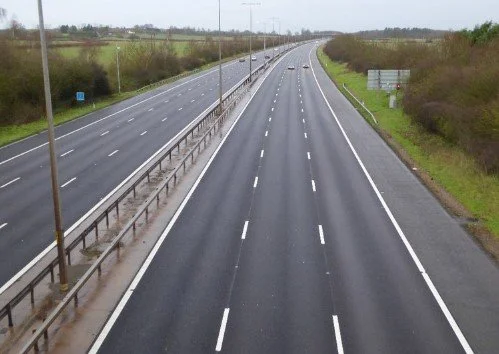
Broken white lines mean something when driving - if you don’t know, then find out what!