France Part 18 - Overwhelming - So Lest We Forget!
This post is longer than normal, but I will make no apologies. If we can’t spend a little more time in our lives speaking about the sacrifices made by the men and women who went to war for us, then who can we do it for?
What amazing emotional days yesterday was, and today has been!. Maybe it’s because it’s been a while since we were in Normandy, especially at Gold Beach – I don’t know. As we travel north again into the Somme Region, we are seeing more and more war memorials and cemeteries; it is quite uncanny. And more importantly I have found the word I have been looking for after more than 7 weeks and it is – ‘overwhelming.’ And I have my neighbour to thank, as it came into my mind as I spoke with her this morning!
On the route we took from Vendeuil to Bray-sur-Somme, part of it was on ‘Le Circuit du Souvenir,’ or ‘The Great Remembrance War Trail,’ in the Somme Region. You expect more and you see more, but we only saw a small part of it, and that was enough for the emotions to start again. The route is signposted with the red poppy emblem on the signs!
The Battle of the Somme was horrendous and lasted about 4.5 months, and with my feelings towards the people, the poppy, and remembrance, I find it ironic that we are in the Somme region 110 years to the day that the war started!
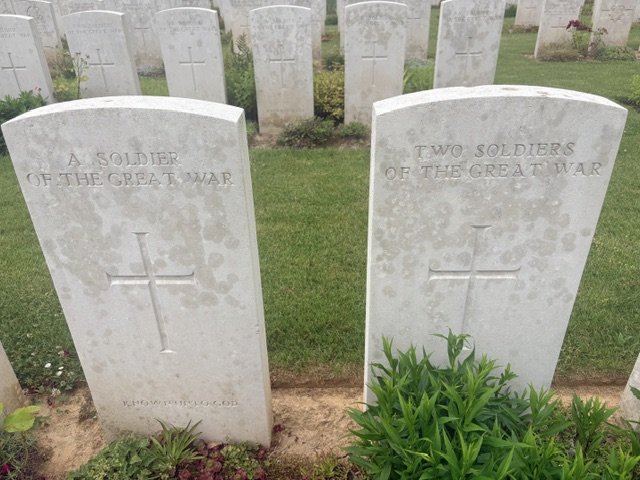
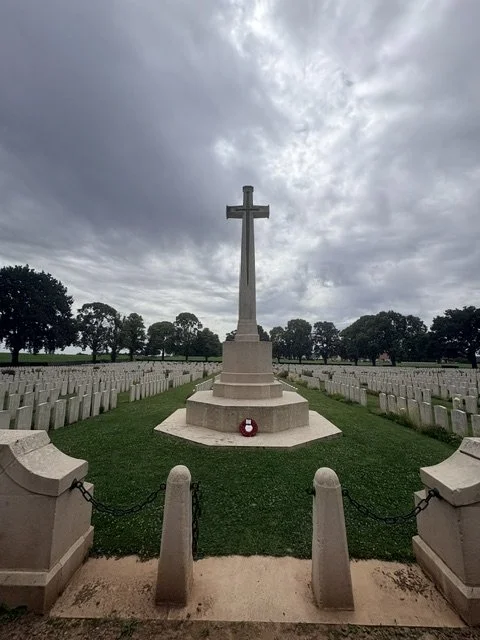
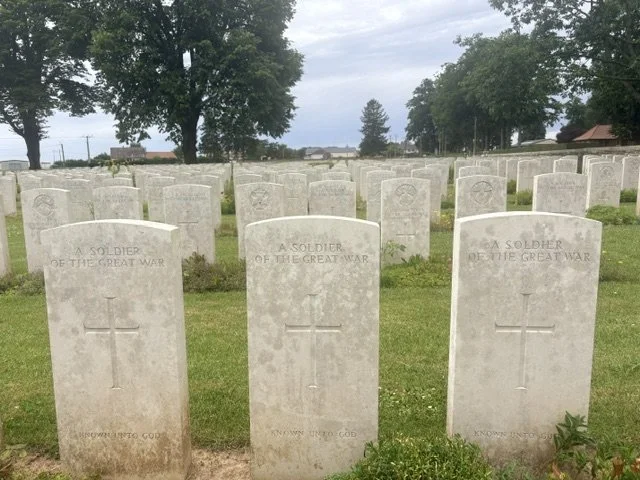
I just can’t start to imagine what these brave men went through, and I have to be honest: it’s not just the commonwealth forces but the enemy too. Because the Germans sent many young men to their deaths, it was a fact of warfare back in the day; probably a case of signing up and probably not coming back. It is a known fact that many young men didn’t even get ashore in the Second World War and died in the landing craft or even in the sea itself!
But let’s start with my six years’ service in the RAF, six years of partying, an easy life, sleeping through night shifts, and not really caring. On some stations we could call the sergeant by his first time – imagine that in the trenches in 1915. I could have gone to the Falklands War, but being only 19 when it started and as an inexperienced driver with only his basic car licence, it was unlikely to happen, so I just carried on as normal, having fun.
I would have gone; I would have had no choice, I suppose, just like the young men in these wars, but as the Falklands conflict only lasted two months and nothing else reared its head during my 6 years, I, like many, didn’t have any worries. However, this is why I find it difficult to join a veterans parade in November; I didn’t do anything!
I joined to get away from my hometown; my options after leaving school were retail, hosiery, or agriculture, and unfortunately, I didn’t fancy any of them. I actually wanted to join the army, but at 16 years old I needed my parents’ permission, and my dad asked me not to, just in case I got sent to Northern Ireland, where the troubles were still quite bad. Being an only son, he said my mother would worry too much, and so I agreed not to bother.
After getting into a bit of a scuffle whereby the police were called, I argued with my mother and she said to me ‘why don’t you do something with your life?' My reply was simple: ‘I want to join the Army, but you won’t let me.’ Her reply was, ‘why don’t you join the RAF instead.’ My reply was, 'Okay, I will.’ And I did, and the rest, as they say, is history!
It wasn’t quite the same enrolment as those who joined back in 1914/15 and onwards. They were joining knowing there was a good chance they would never come home; they had no idea what they were going to face. As well as a ferocious enemy, there were horrible cold winters, dug into a horrible, dirty, and muddy French field in sub-zero temperatures, with comrades dying from the cold.
The winter trench conditions must have been horrendous. Add to this no washing or shower facilities and, worse, no proper toilet facilities, basic rations, and usually living in a hellhole! The stench of human waste and even dead bodies is reported to be horrendous, and you cannot begin to imagine!
I had thermal sleeping bags, waterproof tents, and layers of clothes to wear; we could even light fires in the tents, and there was no hardship at all. On one exercise with the army, the catering team didn’t turn up to give us our evening meal, and of course we were all getting hungry, as we hadn’t eaten since dinnertime.
It was getting dark when they arrived in camp, and they soon got themselves set up. They shouted something like, ‘bacon butties okay, guys,’ and maybe we all cheered through the hunger pangs; I can’t remember.
We went to bed on a full stomach after a couple of butties each, and when we spoke to one of the caterers in the morning, we asked him why they had been so late getting to us. His answer was somewhat different. He told us that when they were packing up to join us, they noticed all the bread was stale and mouldy.
They had put off getting to us until it was dark so that we wouldn’t notice the mouldy bread, and of course we didn’t. The best bit was you couldn’t tell the difference! That and a bit of cold in my thermal sleeping bag was as much hardship as I had to put up with in 6 years. I won’t mention getting drunk and going to the NAAFI disco while on duty, or driving 5,000 litres of aviation fuel home after drinking about 8 cans of lager, our sergeant knowing and simply telling me and my late, great mate, Pete, to go home!
But back to the Somme region, it is heartbreaking. The cemeteries are all immaculate, and when I stopped at the Bazentin-le-Petit-Military-Cemetery, I felt a little privileged to be able to say ‘thank you’ to the 3 guys from the Commonwealth War Cemeteries staff who were working and looking after the graveyard. It won’t mean much to many, but I’ll try to explain!


We can’t tell what life would have been like for white Europeans had Germany won the war; we do know what it would have been like for people of other ethnicities, and most of those might not be here to tell the tale, so we have so much to be thankful for, in fact, so much to thank young men (and laterally) young women for. Many didn’t have the choice as hundreds of thousands volunteered, but then there was conscription, or ‘the draught,’ which made many volunteer so it looked intentional rather than like they had to - quite a good system when you think about it!
But they did it without knowing what they were letting themselves in for, and during WW1, nearly 900,000 UK servicemen died fighting for the cause, including over 19,000 on the first day of the Battle of the Somme!
But did you know that the total number of service people who died during WW1 was over 9 million? In fact, numbers are so inaccurate it states ‘between 9 & 11 million.’ That’s a big difference when it comes to anything, but especially human life!
That is some number, and what a sacrifice. So maybe you can see why I feel so strongly about the remembrance and the poppy? They gave everything for people they didn’t know and generations they would never meet, living and dying in freezing, squalid conditions, many in hand-to-hand combat, and the most horrible and gruesome deaths while serving their country. I partied, got drunk, and turned over in my thermal sleeping bag with a fire beside me, on a belly full of mouldy bacon sandwiches!
Would I feel as strong had I not served? Hypothetical question, and we will never know. But after yesterday and today, I can only feel compassion and maybe even heartache for what these people went through.
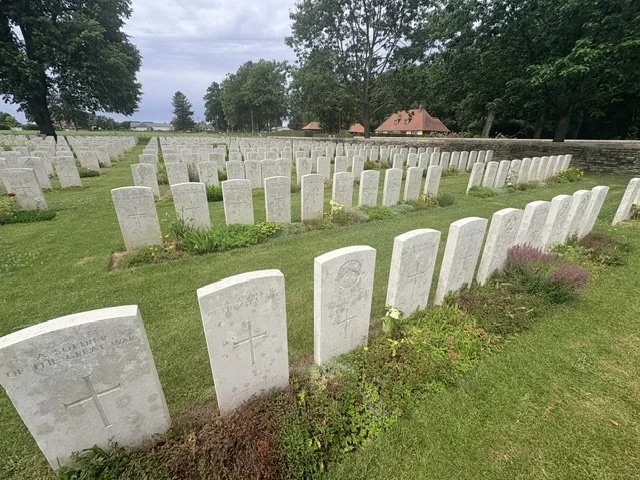
Yesterday started at the Delville Wood South African National Memorial, which are the first photos, and the ones below; it just brought a lump to my throat, row after row of straight headstones; as mentioned, it’s as if the servicemen are standing to attention even in death, perfect!
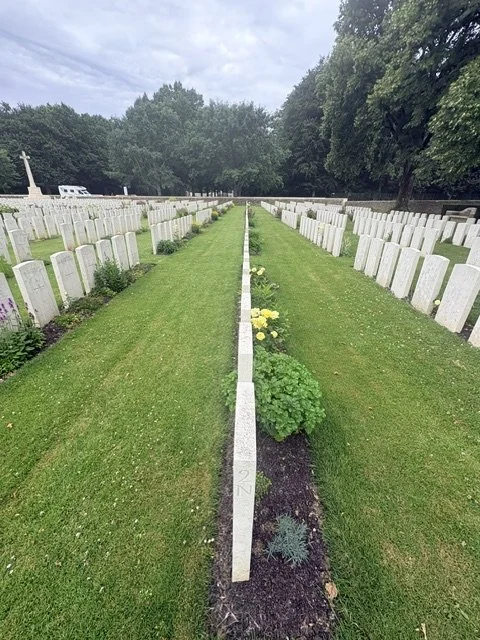
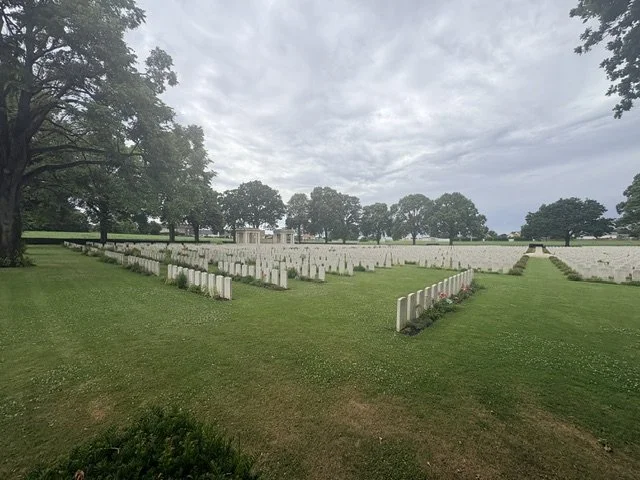
The strangest thing was that there didn’t seem to be that many South African headstones; a lot were UK men and regiments. What brought the lump to my throat was the rows of graves that were engraved with ‘a soldier of the great war – known to God.’ It was so emotional; you must do this if you have not done so! All the rows were of 10 headstones, and two rows, practically beside each other, were all unknown!
The hardest part for me was when a headstone was inscribed with these words, and it then stated what regiment they were enlisted in; it made me wonder how they could know one thing but not the other, but in war I suppose I could too, and it doesn’t bear thinking about.
As we drove the route, we would see signs for memorials and cemeteries, and we just couldn’t stop at all of them, some because they were down side roads that I would not take the motorhome down, or there were just too many, and we couldn’t have taken them all in. We passed the smallest of resting places that housed some 100 graves. Probably a case of being buried where they fell; I have deliberately not researched this so I can just write this as I see it. But so different from the cemetery in Bayeux, where there are over 4,500 graves!
Another reason for not stopping was because we were heading for the Thiepval Memorial, near the village of the same name. This place is amazing and commemorates over 72,000 servicemen who were killed or missing in action and who have no known grave, and beside it are two cemeteries. One Commonwealth, one French, whereby nearly all the graves are marked as ‘unknown.’ It is absolutely amazing and heart-wrenching to see this!
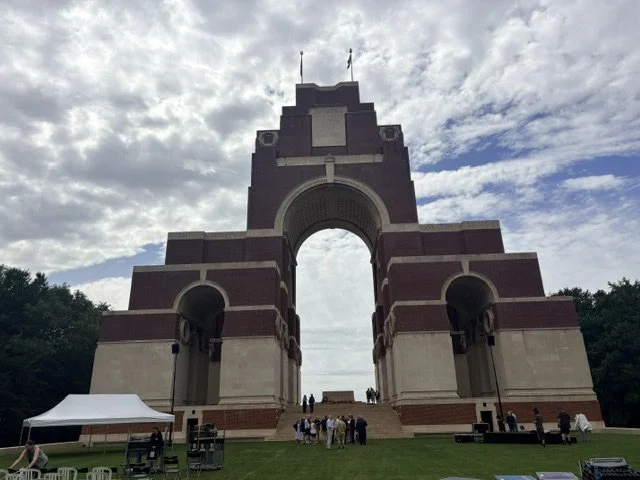
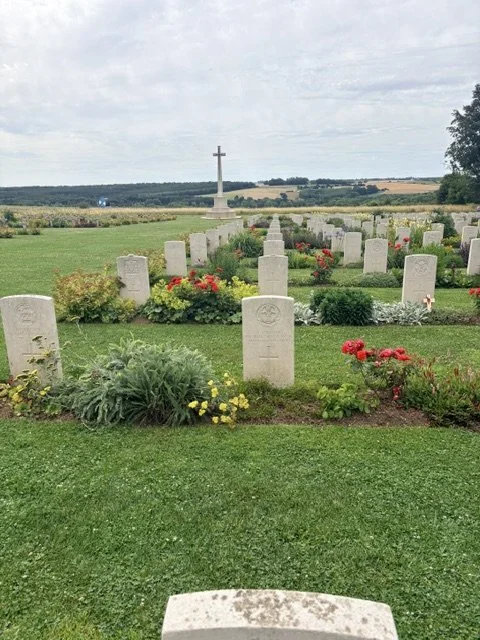
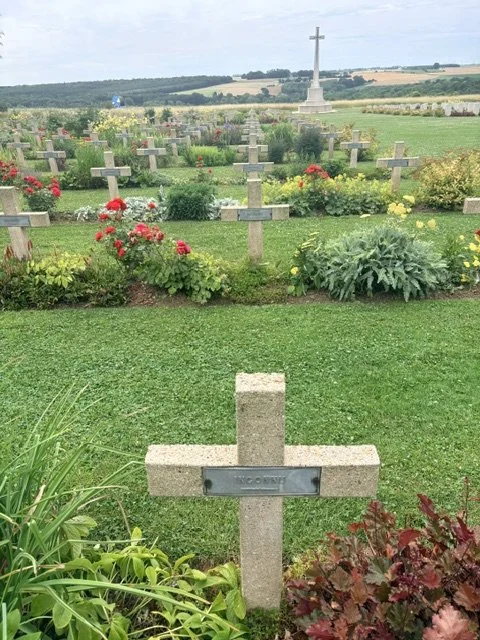
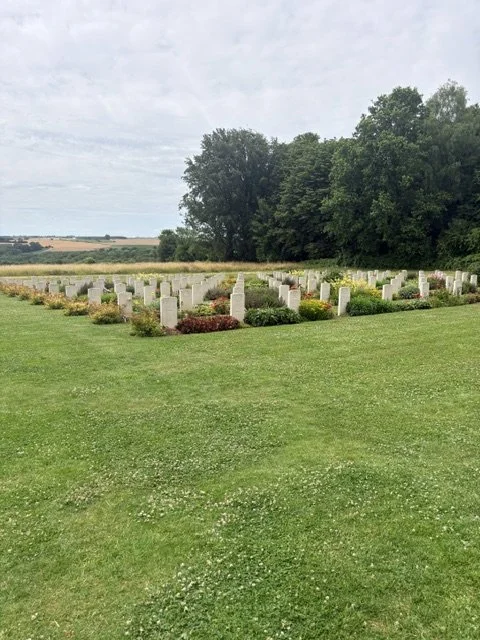
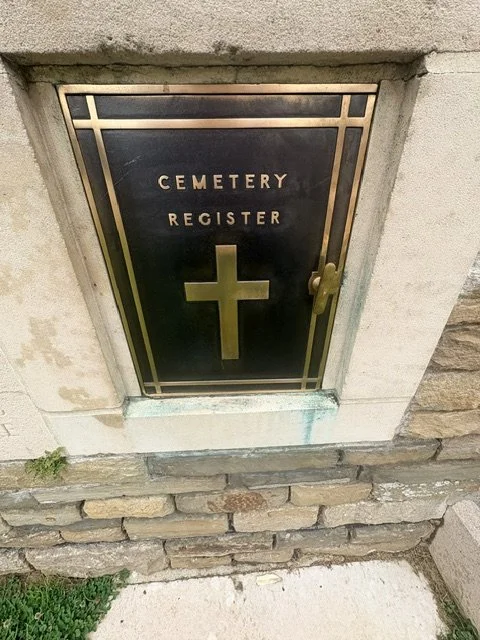
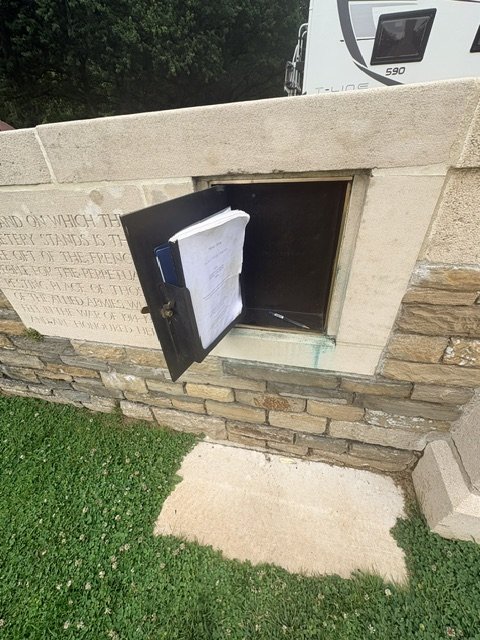
One small aspect of the graveyards was each one had a small compartment, even at Thiepval, and it contained a log of the graves and the names of the men buried there. It is truly an amazing masterpiece of remembrance, work, volunteers, buildings, and memorials. But most importantly, how these places are looked after, and that is why I had to say my thank you’s to the working men I saw!
Future generations should never be allowed to forget what happened. We don’t need to go into detail about how they died or show children pictures of graphic scenes, but we must let our children know, and we must wear the poppy with pride. Anyone who thinks differently must come to the Somme region to see what happened and what people gave for us. Just like we saw today with coach loads of young children visiting the latter site
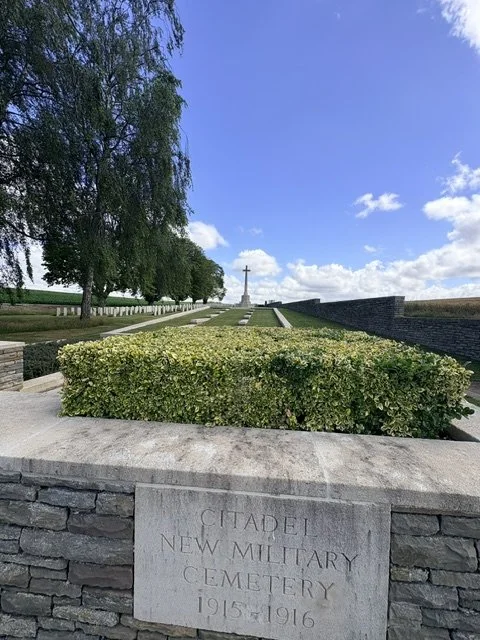
Today we stopped at a couple of smaller cemeteries en route to Arras; one was at Citadel New Cemetery and the other at the very small Longueval Road War Cemetery, and I will show you what I think is one of the saddest sights I have seen after visiting all the memorial sites. It is at the Citadel Cemetery and is a single grave on its own away from all the rest, but to me what makes it sad is that it is also the grave of an unknown soldier, and I wondered why; more so because he was unknown, could he not have been buried with his comrades? Overwhelming indeed.
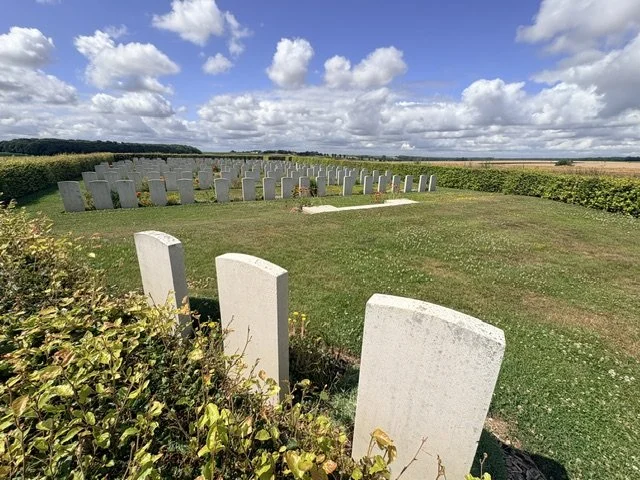
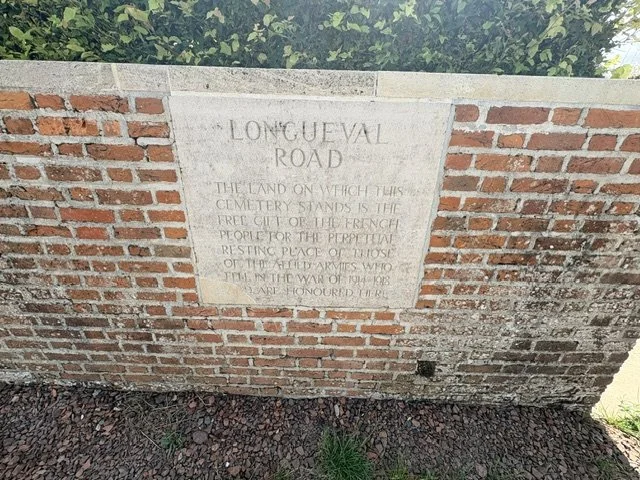
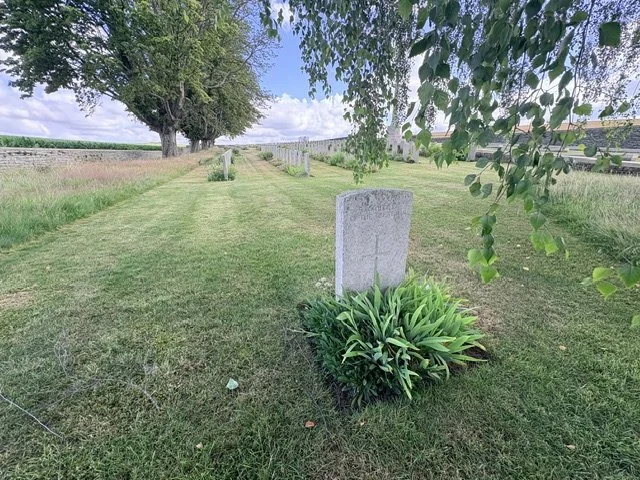
And maybe the head teacher at Sackville Heights Elementary School in Halifax should arrange a visit for its pupils to Thiepval instead of asking soldiers to ditch their uniforms for a Remembrance Day service! Without these men there might not be any pupils at their school!
And that is what is wrong in today’s society; embrace the remembrance rather than trying to concern yourself that people may have come from a war situation and may feel uncomfortable with remembrance. They wouldn’t be sitting at a desk listening to the stories if it wasn’t for those who died! So stop worrying about those people and remember the ones who gave the ultimate sacrifice, living, sleeping, and fighting in horrible, disgusting conditions so you can live your cotton-wool lives!
Thanks for reading
DJ